Hormones regulate almost every vital function in the human body—from glucose metabolism and energy levels to bone strength and reproductive health. When hormonal balance is disrupted, it can impact multiple organ systems, including the kidneys, heart, and metabolic network.
At Tabba Kidney Institute, our specialized Endocrinology & Diabetes Clinic offers expert diagnosis, long-term management, and personalized treatment plans led by our experienced Consultant Endocrinologist & Diabetologist.
1. Diabetes & Blood Sugar Management
Introduction to the Disease
Diabetes Mellitus is a chronic metabolic disorder characterized by elevated blood glucose (sugar) levels due to insufficient insulin production (Type 1 Diabetes), body resistance to insulin (Type 2 Diabetes), or hormonal shifts during pregnancy (Gestational Diabetes). Uncontrolled diabetes is the leading cause of Diabetic Nephropathy (kidney disease), cardiovascular complications, nerve damage, and vision loss.
Symptoms
Frequent urination (Polyuria), especially at night
Excessive thirst (Polydipsia) and unexplainable hunger
Unexplained weight loss or chronic fatigue
Blurry vision and slow-healing wounds or skin infections
Tingling, numbness, or burning sensation in hands and feet
Diagnosis & Treatments at Tabba Kidney Institute
Precision Diagnostics: On-site fasting blood glucose testing, HbA1c profiling, Oral Glucose Tolerance Tests (OGTT), continuous glucose monitoring assessment, and urine microalbuminuria screening to detect early diabetic kidney strain.
Tailored Treatment Plans: Customized oral hypoglycemic therapy, advanced insulin management regimens, and lifestyle/dietary counseling.
Preventive Cardio-Renal Care: Specialized protocols aimed at controlling blood sugar strictly to safeguard kidney function and prevent diabetic end-organ damage.
2. Thyroid Disorders
Introduction to the Disease
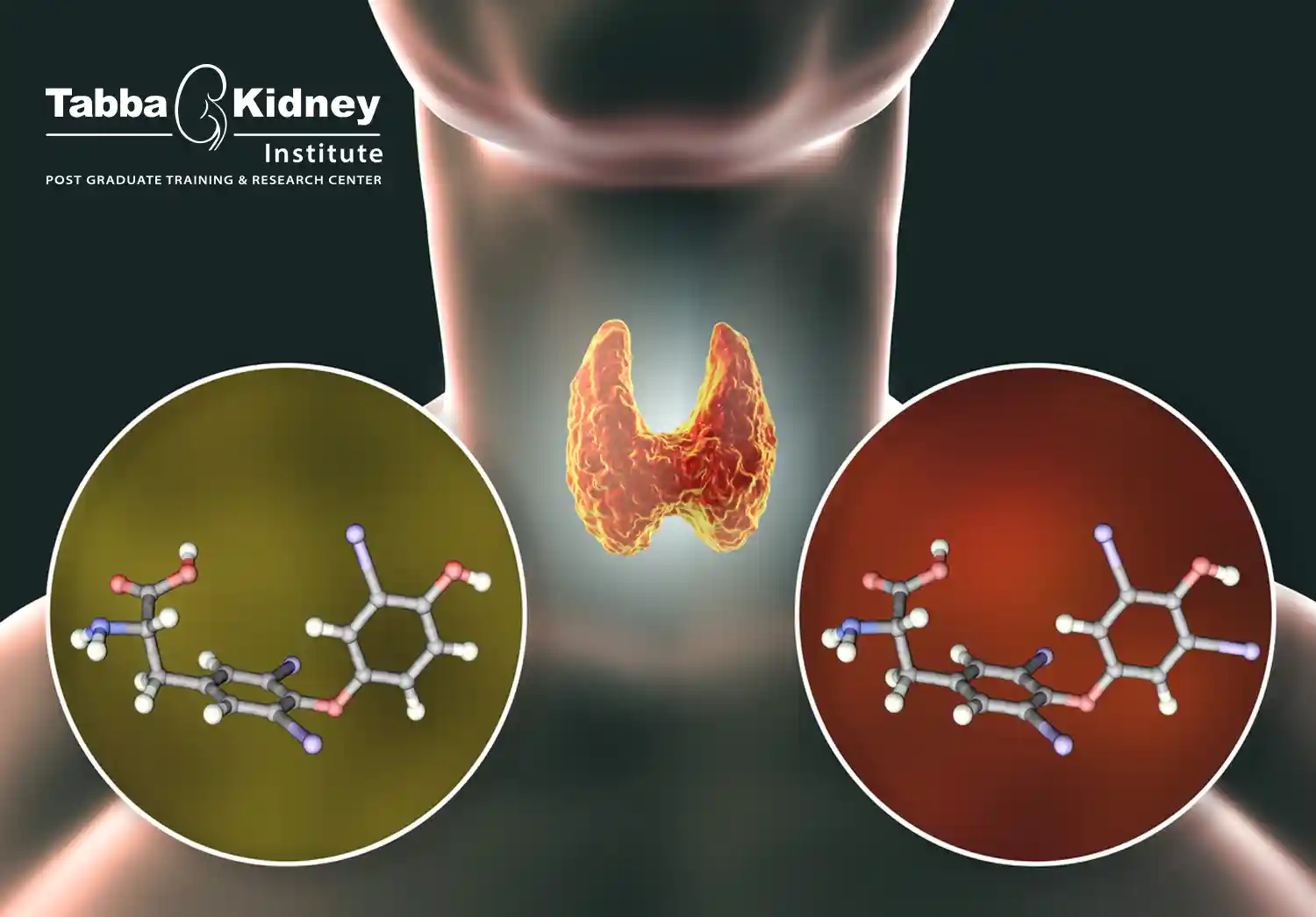
The thyroid gland, located at the base of the neck, produces hormones (T3 and T4) that govern your body’s metabolism, energy regulation, body temperature, and heart rate. Thyroid disorders mainly manifest as Hypothyroidism (underactive thyroid slowing down metabolism) or Hyperthyroidism (overactive thyroid accelerating metabolism), as well as thyroid nodules or goiters.
Symptoms
Hypothyroidism: Unexplained weight gain, severe fatigue, cold intolerance, dry skin, hair thinning, constipation, and depression.
Hyperthyroidism: Sudden weight loss, rapid or irregular heartbeat (palpitations), heat intolerance, tremors, anxiety, and excessive sweating.
Thyroid Nodules/Goiter: Swelling in the neck, difficulty swallowing, or a persistent hoarse voice.
Diagnosis & Treatments at Tabba Kidney Institute
Precision Diagnostics: Comprehensive Thyroid Function Tests (T3, T4, TSH), thyroid antibody screening, high-resolution thyroid ultrasound, and Fine Needle Aspiration Cytology (FNAC) coordination for nodules.
Tailored Treatment Plans: Precise hormone replacement therapy for hypothyroidism, anti-thyroid medications and beta-blockers for hyperthyroidism, and regular monitoring to maintain optimal hormonal equilibrium.
3. Metabolic & Lipid Conditions
Introduction to the Disease
Metabolic conditions encompass a cluster of disorders involving abnormal cholesterol, triglycerides, or metabolic pathways—often referred to as Dyslipidemia or Metabolic Syndrome. High levels of LDL (“bad” cholesterol) and triglycerides alongside low HDL (“good” cholesterol) contribute significantly to atherosclerosis (hardening of arteries), fatty liver disease, hypertension, and heightened cardiovascular and renal risks.
Symptoms
Metabolic and lipid conditions are often “silent” and show no noticeable symptoms until complications develop. When present, signs may include:
High blood pressure readings
Increased waist circumference (abdominal obesity)
Fat deposits around eyes or tendons (Xanthelasma/Xanthomas)
Fatigue and exertional chest discomfort (in advanced cardiovascular involvement)
Diagnosis & Treatments at Tabba Kidney Institute
Precision Diagnostics: Advanced Fasting Lipid Panels (Total Cholesterol, HDL, LDL, Triglycerides), ApoB profiling, liver function panels, and metabolic risk assessments.
Tailored Treatment Plans: Evidence-based lipid-lowering pharmacological therapies (including statins and non-statin options), personalized medical nutrition therapy, and targeted cardiovascular-renal risk reduction plans.
4. Reproductive & Sex Hormone Imbalances
Introduction to the Disease
Reproductive endocrine disorders occur when the glands producing estrogen, progesterone, testosterone, or pituitary regulators malfunction. Common conditions include Polycystic Ovary Syndrome (PCOS) in women, male hypogonadism (low testosterone), hyperprolactinemia, and adult hormonal imbalances that disrupt fertility, mood, and physical vitality.
Symptoms
Women (PCOS/Estrogen Imbalance): Irregular or absent menstrual periods, excessive facial/body hair (hirsutism), stubborn acne, weight gain, and difficulty conceiving.
Men (Low Testosterone/Hypogonadism): Reduced libido, erectile dysfunction, loss of muscle mass, persistent fatigue, and mood fluctuations.
General: Unexplained changes in body composition, low motivation, and fertility issues.
Diagnosis & Treatments at Tabba Kidney Institute
Precision Diagnostics: Comprehensive hormone profiling including LH, FSH, Testosterone (Free and Total), Estrogen, Progesterone, Prolactin, and DHEAS, alongside pelvic ultrasonography coordination.
Tailored Treatment Plans: Targeted hormonal balance therapies, ovulation induction management for PCOS, testosterone replacement therapy (TRT) for diagnosed male hypogonadism, and lifestyle modification strategies.
5. Bone & Mineral Metabolism
Introduction to the Disease
Bone and mineral metabolic disorders affect how the body absorbs, stores, and uses vital minerals like calcium, phosphorus, and Vitamin D. Conditions such as Osteoporosis, Osteomalacia, Hyperparathyroidism, and Renal Osteodystrophy cause bones to become weak, brittle, and prone to fractures. Proper regulation of these minerals is closely tied to parathyroid gland and kidney health.
Symptoms
Frequent bone, joint, or muscle aches
Fragility fractures occurring from minor bumps or low-impact falls
Loss of height over time or stooped posture
Muscle weakness, cramps, or spasms (due to calcium imbalances)
Kidney stones (frequently linked to hypercalcemia and hyperparathyroidism)
Diagnosis & Treatments at Tabba Kidney Institute
Precision Diagnostics: Bone Mineral Density (DEXA) scan evaluations, Serum Calcium, Phosphorus, Vitamin D (25-OH), Parathyroid Hormone (PTH) assays, and 24-hour urinary calcium studies.
Tailored Treatment Plans: Advanced anti-resorptive and bone-building medications for osteoporosis, therapeutic Vitamin D and calcium supplementation protocols, management of secondary hyperparathyroidism, and joint cardio-renal bone protection plans.
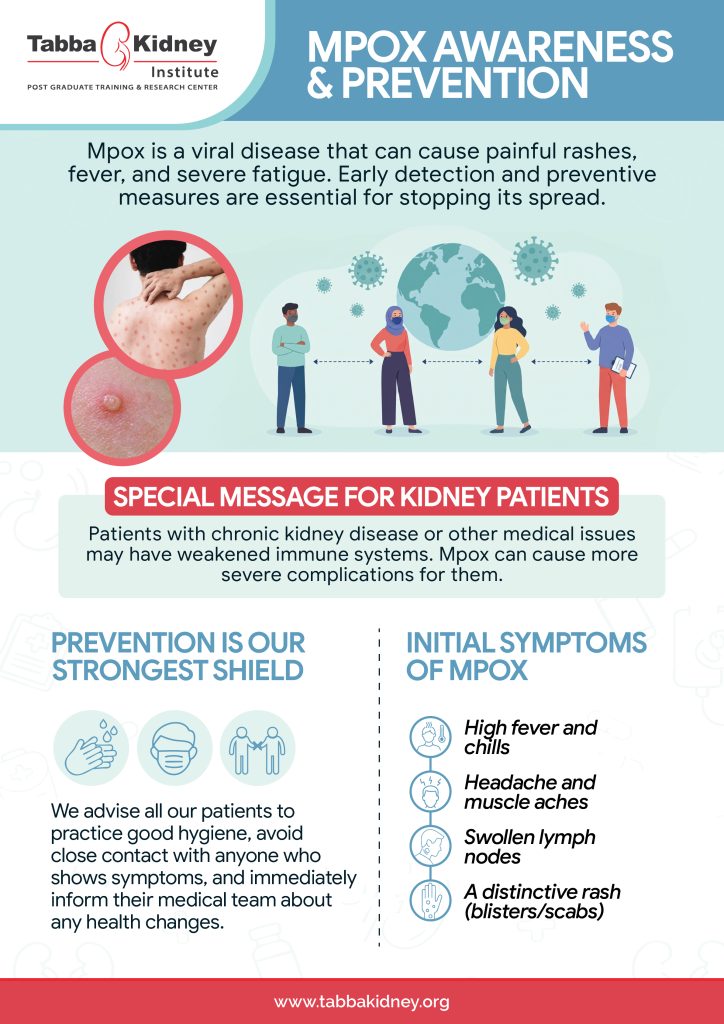
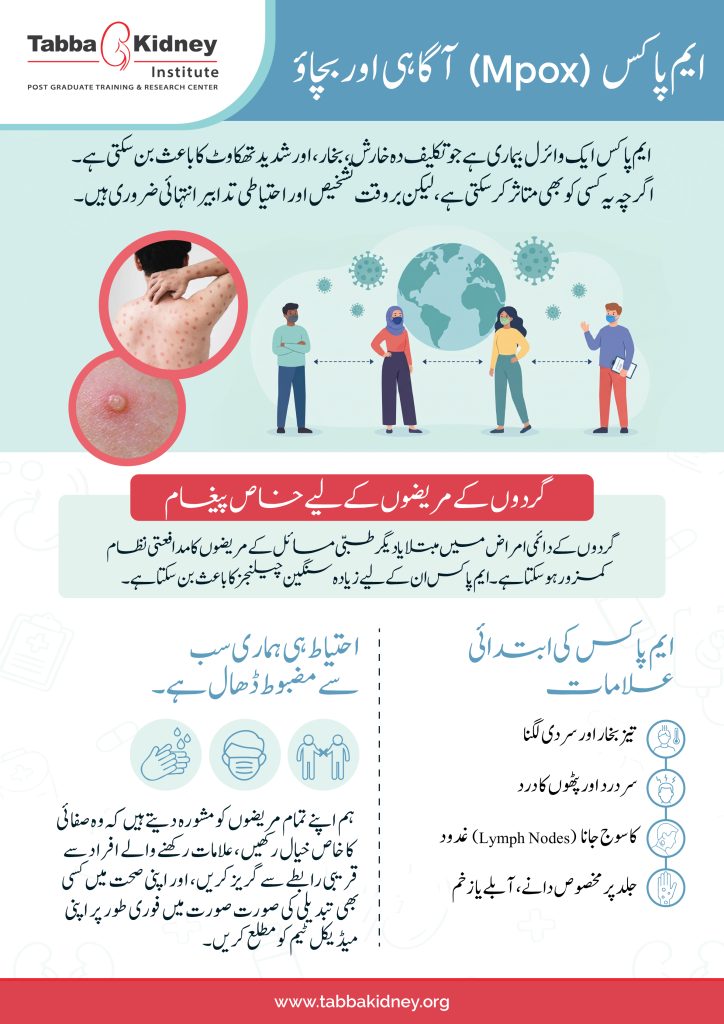
Knowing the Initial Symptoms of Mpox
Early detection can significantly impact your care. Please be vigilant for the initial symptoms of Mpox, which include:
High fever and chills
Headache and muscle aches
Swollen lymph nodes (often a key indicator that differentiates Mpox from other similar illnesses)
A distinctive rash that can look like blisters, bumps, or scabs, and may be painful.
Tabba Kidney Institute: Your Partner in Health
The Tabba Kidney Institute (Post Graduate Training & Research Center) is committed to providing excellent care and guidance. Please do not hesitate to contact our team with any questions or concerns you have regarding Mpox, your kidney health, or your specific treatment plan. If you are experiencing symptoms or have concerns about potential exposure, it is vital to speak with a specialist who understands the intersection of viral infections and renal health.
If you are facing problems or symptoms, you can consult:
Specialist: Dr. Ayesha Ilyas (Infectious Disease Specialist)
Clinic Hours: Tuesdays, 10:00 AM – 12:00 PM
Location: Tabba Kidney Institute (Main Hospital)