A Comprehensive Guide to Medical Nutrition Therapy & Lifestyle Modifications for Extreme Weather
Understanding Heat Exhaustion & Kidney Health
Extreme temperatures can take a serious toll on the human body. When the mercury rises, the body loses essential fluids and electrolytes through sweat, placing extra stress on the cardiovascular and renal systems.
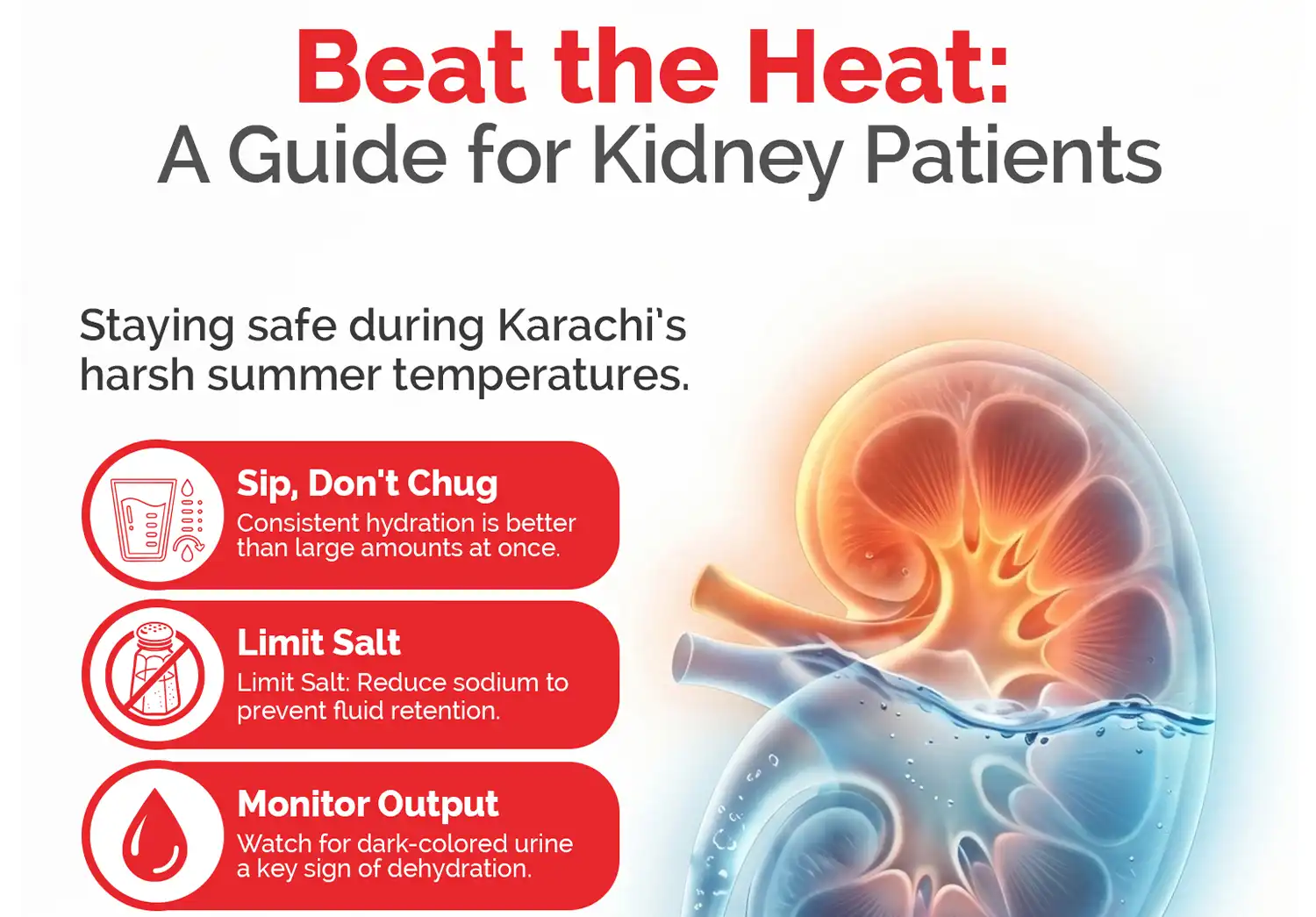
Maintaining adequate hydration is the cornerstone of preserving Kidney health. Dehydration can reduce blood flow to the kidneys, leading to acute stress. If left unchecked, this could escalate into a Kidney emergency. To prevent such complications, our specialists at the Kidney Hospital strongly recommend following a proactive Medical Nutrition Therapy (MNT) plan.
Hydrating Foods & Diet Guidelines
- Fruits & Vegetables: Eat hydrating foods like watermelon, melon, cantaloupe, grapes, and banana. Incorporate lauki, tori, kaddu, and leafy salads into your meals.
- Foods to Avoid: Steer clear of fried, oily, and spicy foods, as well as too much chai or coffee. Reduce soft drinks and sugary beverages.
- Light Diet: Eat light foods such as khichdi, daal, salad, and yogurt with every meal. Avoid long fasting, which can cause weakness and low blood glucose.
- Toddler Nutrition: Make fruit ice lollies using different pureed fruits for toddlers instead of sugary ice creams. Add fruit yogurt to their lunch boxes.
Medical Nutrition Therapy (MNT)
- Hydration: Drink 8–12 glasses of water daily. Increase this amount if you have high exposure to the heat.
- Electrolyte Balance: Consume lemon water for hydration and sodium replacement. Use coconut water, which is the best source of potassium.
- Traditional Cooling Drinks: Include lassi or chaach, mint lemonade, falsa juice, and yogurt smoothies to keep the body cool.
- Chia Seeds: Add soaked chia seeds to drinks, milkshakes, or yogurt for cooling, refreshing benefits and improved gut health.
Essential Lifestyle Modifications
- Beyond diet, your daily habits play an important role in beating the heat:
- Wear light-colored, breathable clothes to facilitate sweat evaporation.
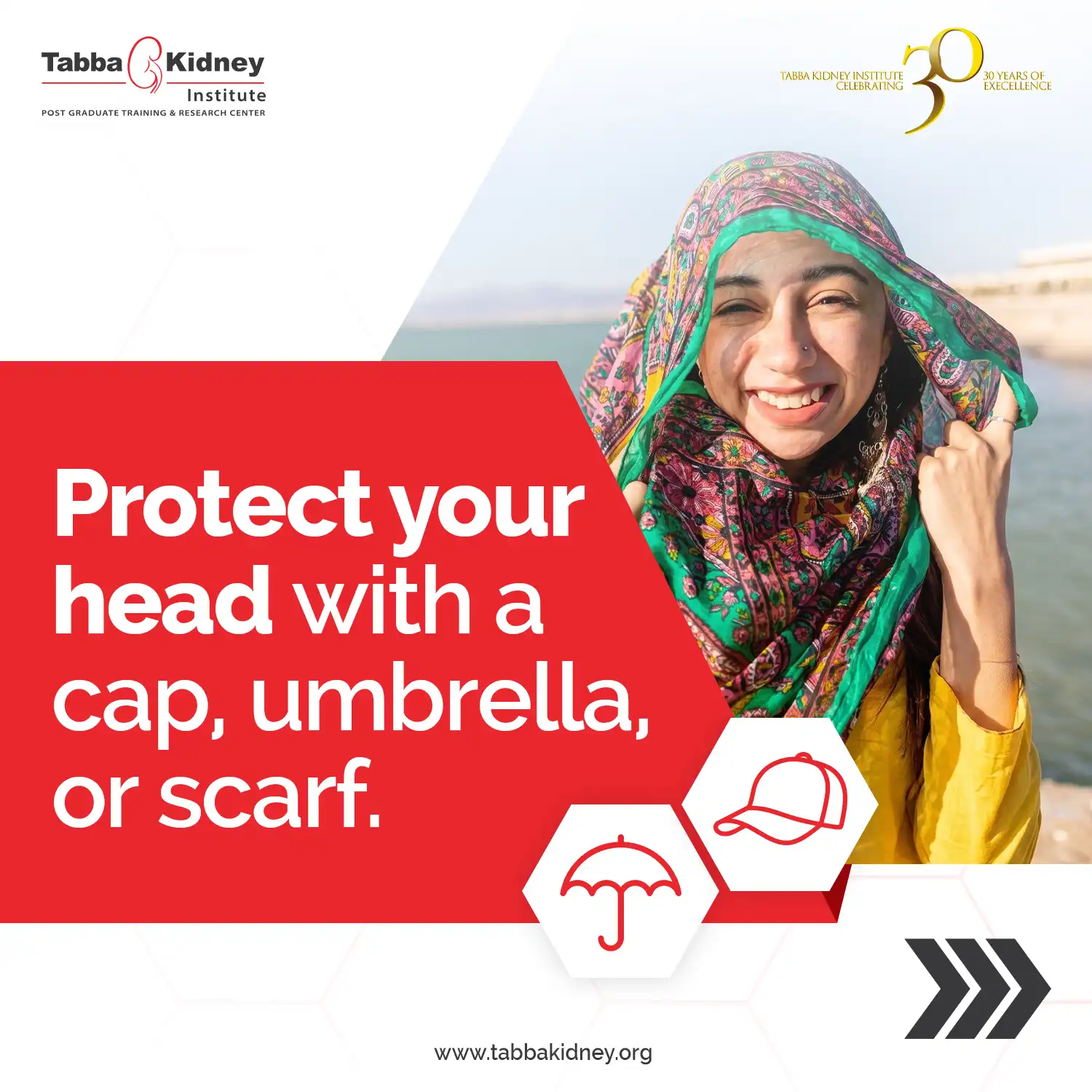
- Protect your head with a cap, umbrella, or scarf when outdoors.
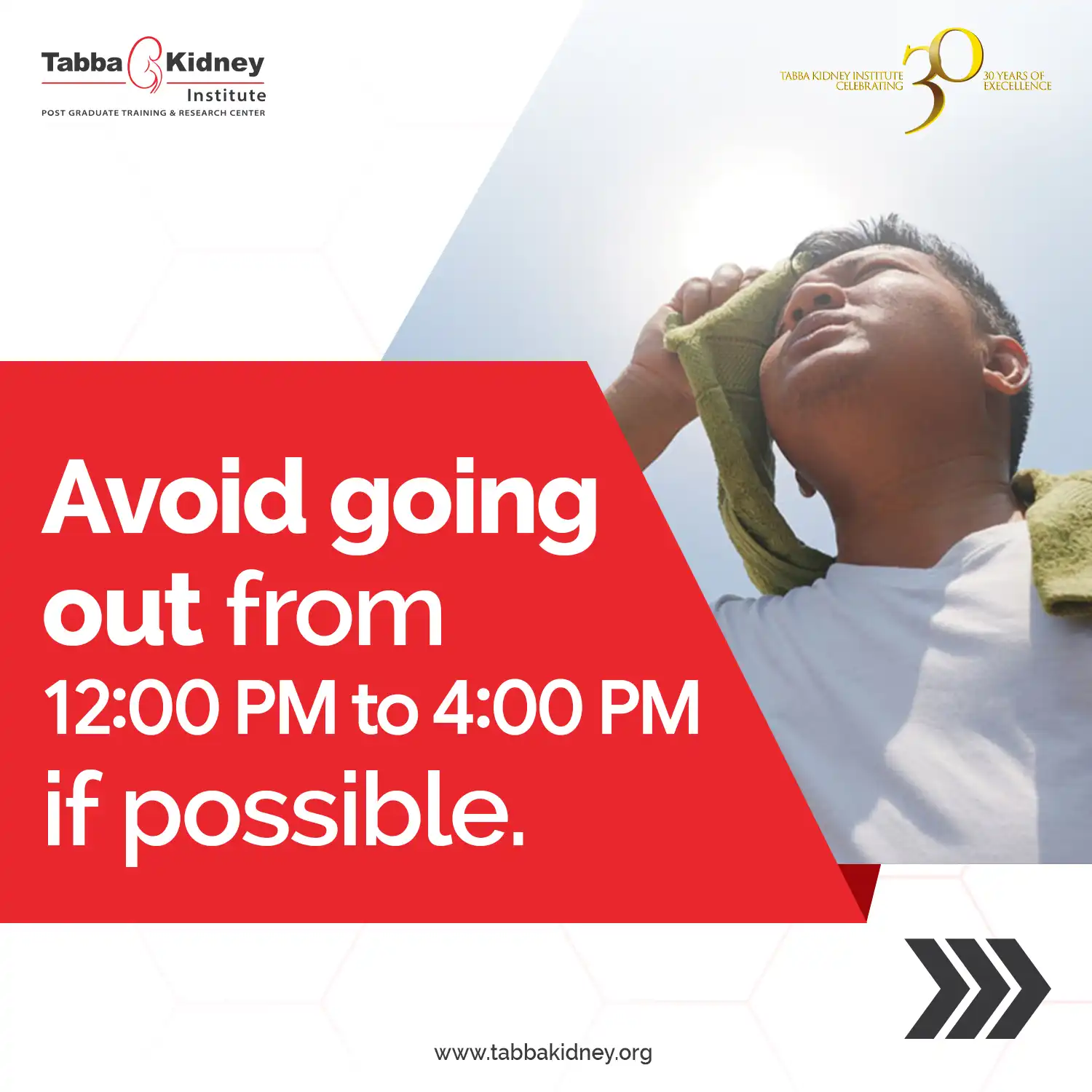
- Avoid going out between 12 PM and 4 PM whenever possible.
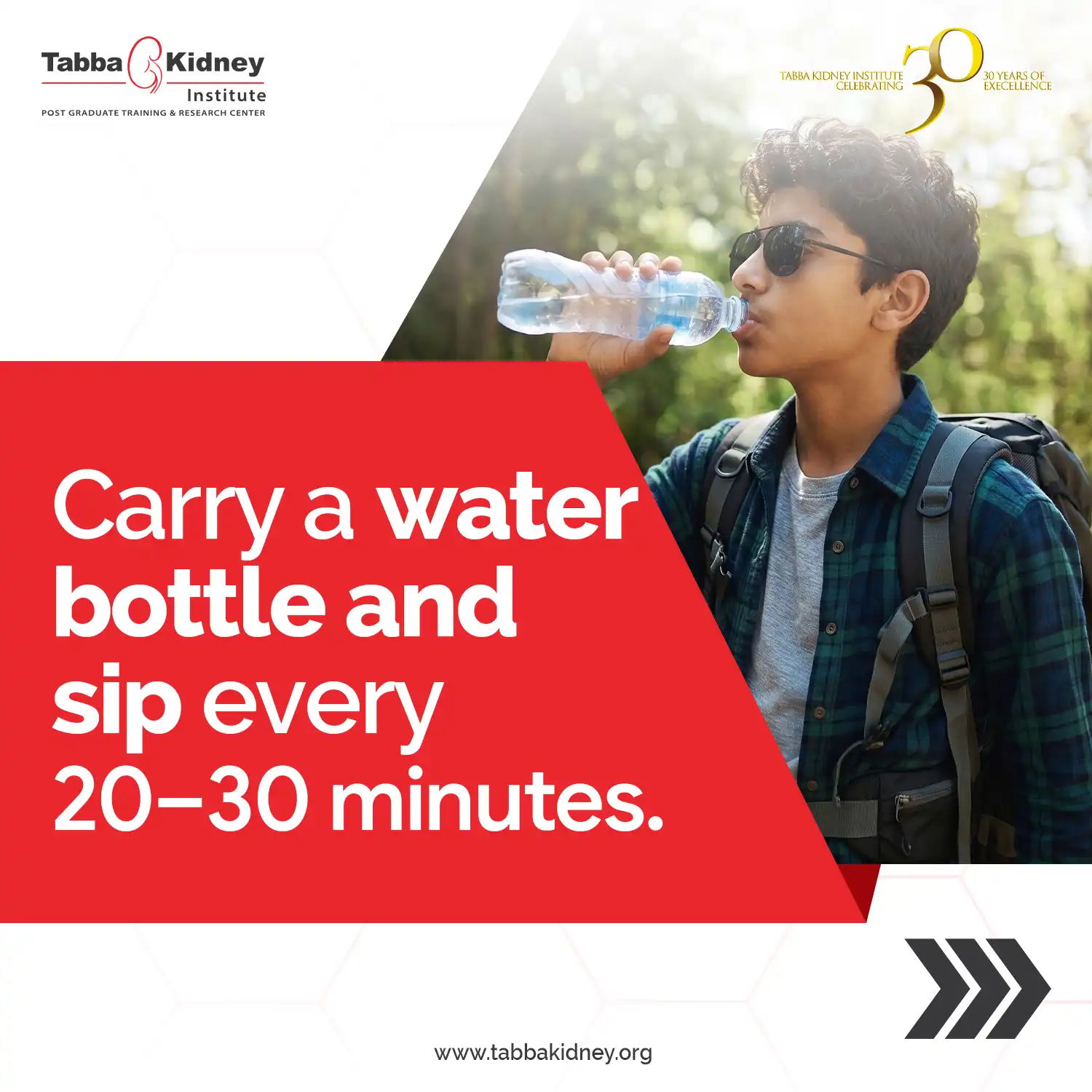
- Carry a water bottle and take small sips every 20–30 minutes.
- Take cool showers or baths to bring down your core temperature.
- Exercise indoors or during the early morning/late evening hours.
When to Seek Medical Support
If you experience severe weakness or dizziness, give fluids immediately. If you or your family members experience persistent heat-related symptoms, consult our Urology Doctors or Nephrology Doctors for a proper checkup.
For patients managing high blood pressure or other heat-sensitive conditions, visit Tabba Kidney Institute’s Hypertension Clinic for personalized advice and monitoring. Remember, taking early precautions ensures a safe and healthy summer for you and your loved ones.