
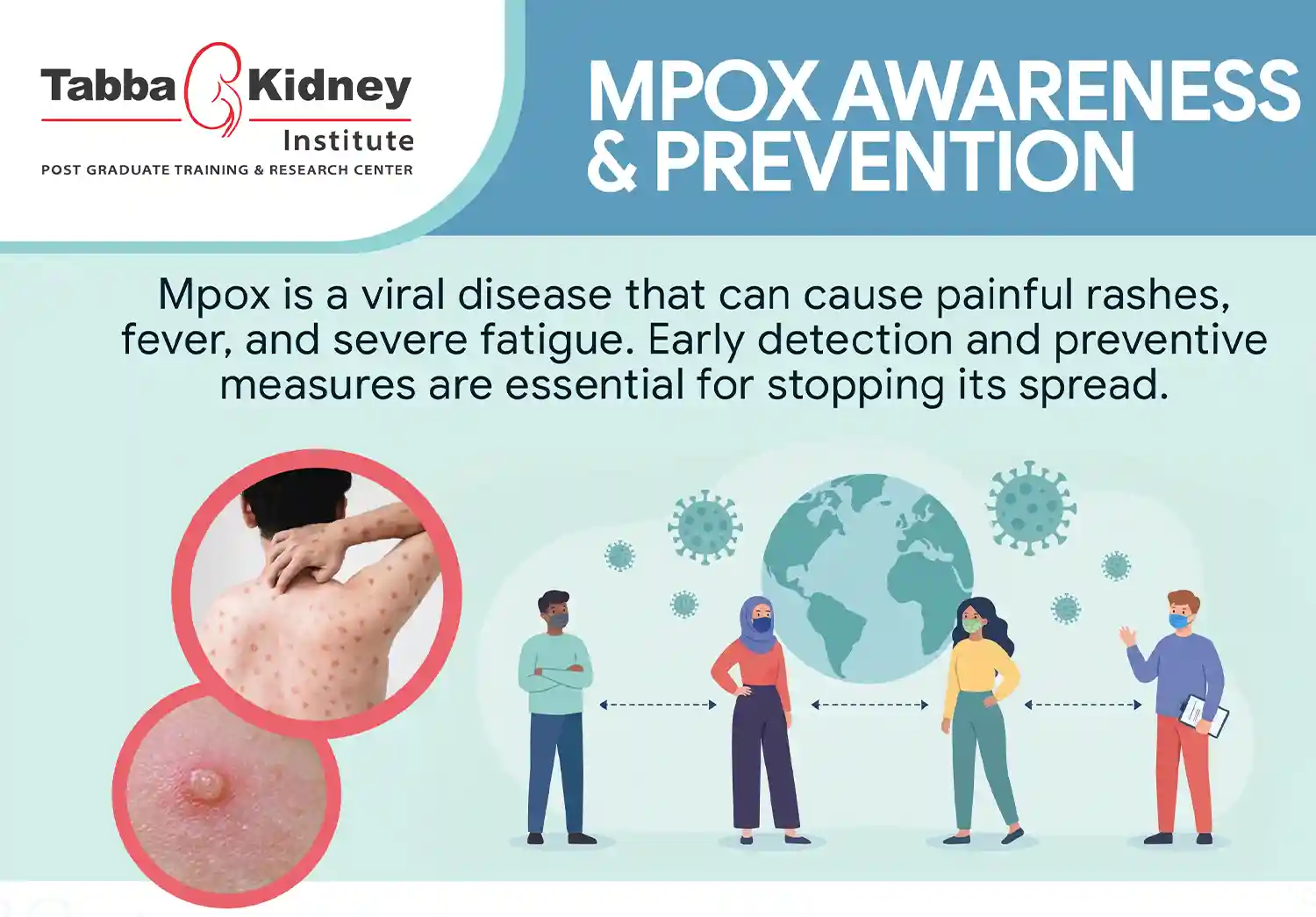
As global health conditions evolve, it is vital to stay informed about new health concerns. Mpox is a viral disease that can impact communities, and understanding how it affects different populations is essential. For individuals managing Chronic Kidney Disease (CKD) or other medical issues, understanding the risks and preventative measures is crucial. This article is designed to provide clarity on what Mpox is, why kidney patients should take specific precautions, and the steps you can take to protect yourself and your loved ones.
What is Mpox?
Mpox is a disease caused by infection with the Mpox virus. It is a viral disease that can cause painful rashes, fever, and severe fatigue. The illness can range from mild to severe, and while many people recover fully, certain groups are at higher risk for complicated or severe outcomes. The virus typically spreads from person to person through close, personal, skin-to-skin contact, including:
Direct contact with Mpox rash, scabs, or body fluids from a person with Mpox.
Touching objects, fabrics (clothing, bedding, or towels), and surfaces that have been used by someone with Mpox.
Contact with respiratory secretions during prolonged, face-to-face contact.
Why Is a Special Message Essential for Kidney Patients?
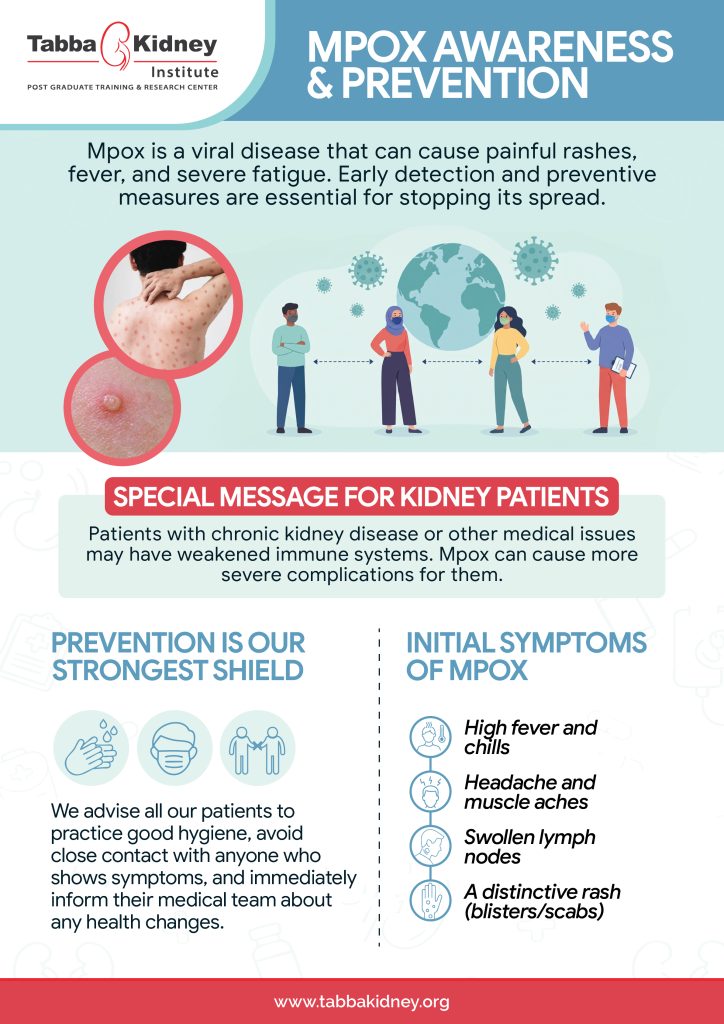
Patients living with Chronic Kidney Disease (CKD) or other serious medical issues often face unique health challenges. A critical factor is that kidney patients may have weakened immune systems.
A weakened immune system, whether due to the underlying kidney condition or medications, makes it harder for the body to fight off infections. This means that if a kidney patient is exposed to the Mpox virus, they may be at a higher risk of developing more severe complications.
At Tabba Kidney Institute, our priority is your safety. “Early detection and preventive measures are essential for stopping its spread.”
Prevention is Our Strongest Shield
While the information can seem daunting, there are clear, effective steps you can take. We advise all our patients to practice vigilance and prioritize prevention. Here are the critical preventative measures:
1. Practice Good Hygiene
Wash your hands frequently with soap and water for at least 20 seconds.
Use an alcohol-based hand sanitizer (at least 60% alcohol) if soap and water are not available.
Avoid touching your face with unwashed hands.
2. Practice Social Distancing & Avoid Close Contact
Avoid close, skin-to-skin contact with anyone who shows symptoms of Mpox.
Be cautious about sharing personal items like towels, bedding, or eating utensils.
In public spaces, practice social distancing by maintaining space between yourself and others, especially if the status of those around you is unknown.
3. Monitor Your Health & Inform Your Medical Team
Pay close attention to any changes in your health.
“Immediately inform their medical team about any health changes.” This is paramount for kidney patients.
Knowing the Initial Symptoms of Mpox
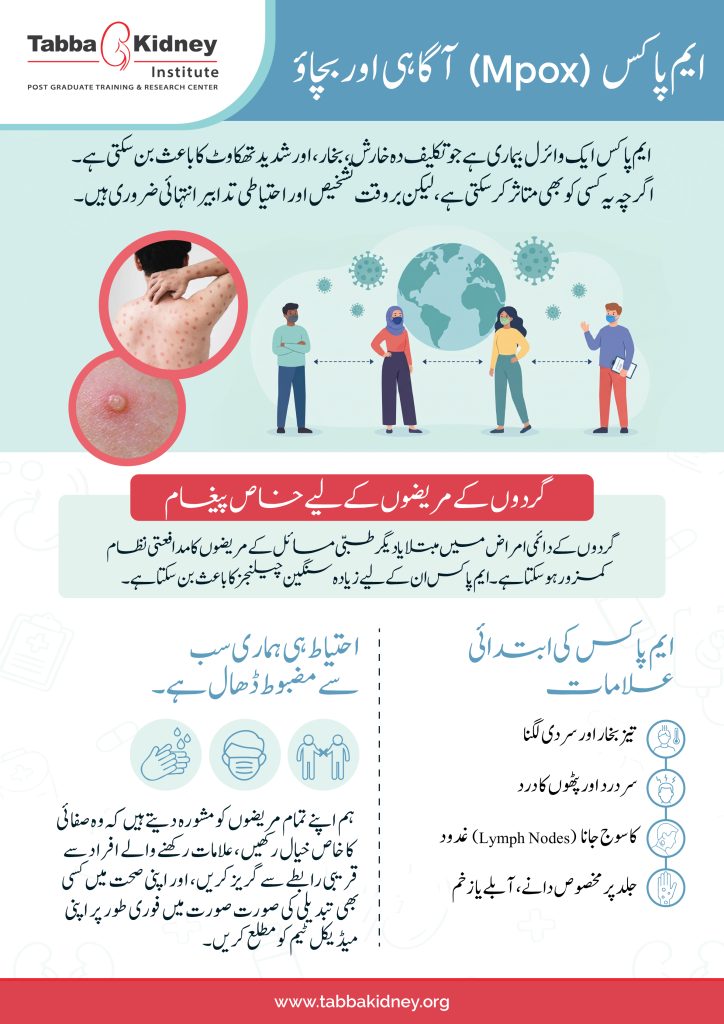
Early detection can significantly impact your care. Please be vigilant for the initial symptoms of Mpox, which include:
High fever and chills
Headache and muscle aches
Swollen lymph nodes (often a key indicator that differentiates Mpox from other similar illnesses)
A distinctive rash that can look like blisters, bumps, or scabs, and may be painful.
Tabba Kidney Institute: Your Partner in Health
The Tabba Kidney Institute (Post Graduate Training & Research Center) is committed to providing excellent care and guidance. Please do not hesitate to contact our team with any questions or concerns you have regarding Mpox, your kidney health, or your specific treatment plan. If you are experiencing symptoms or have concerns about potential exposure, it is vital to speak with a specialist who understands the intersection of viral infections and renal health.
If you are facing problems or symptoms, you can consult:
Specialist: Dr. Ayesha Ilyas (Infectious Disease Specialist)
Clinic Hours: Tuesdays, 10:00 AM – 12:00 PM
Location: Tabba Kidney Institute (Main Hospital)